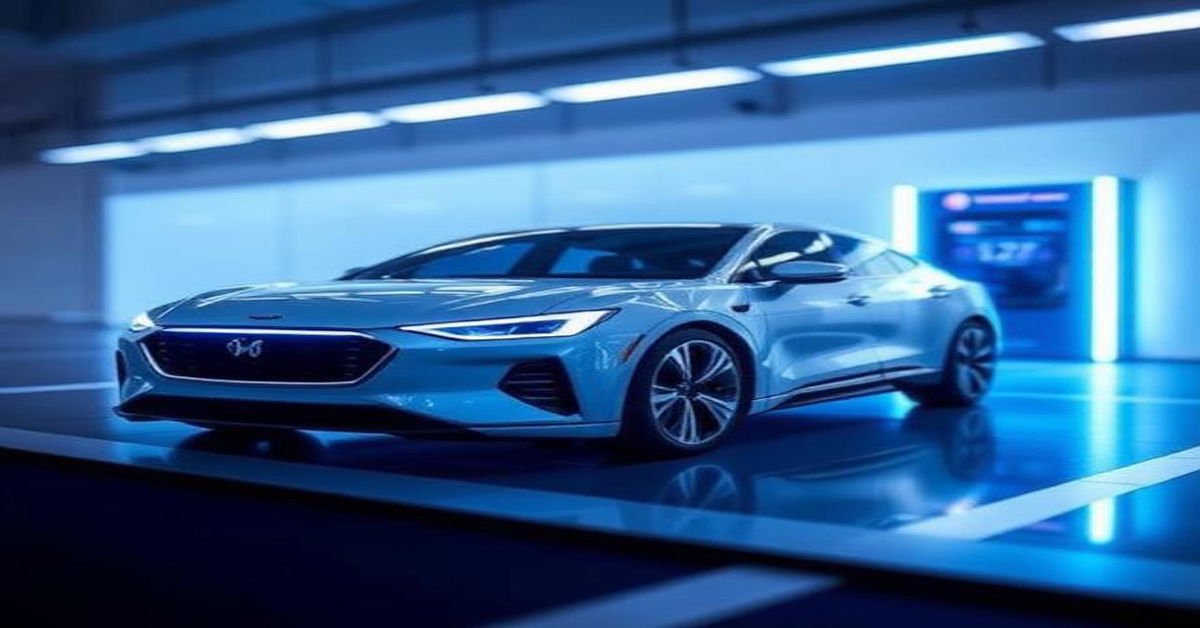
Next-Gen EV Power Cell Innovations evolving faster than any segment in modern transportation. While sleek designs and smart dashboards attract buyers, the real revolution is happening deep inside the battery pack. The next generation of EV power cells is transforming how vehicles charge, store energy, last longer, and perform under extreme conditions.
Global automakers, battery startups, and research institutions are now racing to develop power cells that are lighter, safer, faster-charging, longer-lasting, and more sustainable. These innovations are expected to redefine driving range, affordability, and environmental impact over the next decade.
This article explores the most important next-gen EV power cell innovations shaping the future of mobility.
Why Power Cell Innovation Matters More Than Ever
EV adoption has accelerated worldwide, but battery limitations remain the biggest barrier:
-
Limited range
-
Slow charging times
-
Battery degradation
-
High production costs
-
Raw material scarcity
To solve these challenges, engineers are redesigning the battery at the cell level — not just improving the pack.
Next-gen EV cells focus on:
-
Higher energy density
-
Solid electrolytes
-
Faster ion transfer
-
Thermal stability
-
Reduced rare metal use
-
Extended lifecycle
Key Breakthrough Technologies in Next-Gen EV Cells
1. Solid-State Batteries
Solid-state cells replace liquid electrolytes with solid ceramic or polymer materials. This dramatically improves safety and energy density.
Benefits:
-
50–80% higher energy density
-
No leakage or flammability
-
Longer lifespan
-
Ultra-fast charging potential
Challenge: Expensive manufacturing and scalability.
Major companies investing: Toyota, QuantumScape, Samsung SDI.
2. Silicon-Dominant Anodes
Traditional graphite anodes limit lithium storage. Silicon can store nearly 10x more lithium, offering huge range improvements.
Advantages:
-
Higher capacity
-
Faster charging
-
Smaller battery packs
Problem: Silicon expands during charging, causing structural damage. Researchers are developing nano-silicon and composite structures to stabilize it.
3. Lithium-Sulfur Cells
Lithium-sulfur is emerging as a powerful alternative to lithium-ion.
| Feature | Lithium-Ion | Lithium-Sulfur |
|---|---|---|
| Energy Density | Moderate | Extremely High |
| Weight | Heavy | Very Light |
| Cost | Expensive metals | Low-cost sulfur |
| Lifecycle | Long | Improving |
Still in prototype stage, but ideal for long-range EVs and aviation.
4. Sodium-Ion Batteries
Sodium is abundant and cheaper than lithium.
Why it matters:
-
Lower cost
-
No cobalt or nickel
-
Stable at high temperatures
Limitations:
-
Lower energy density
-
Heavier cells
Perfect for affordable EVs and two-wheelers.
China and India are actively exploring sodium-ion for mass adoption.
5. Structural Battery Cells
Instead of being just energy storage, structural cells become part of the vehicle body.
Benefits:
-
Reduces weight
-
Increases efficiency
-
Saves space
-
Improves rigidity
Tesla and European researchers are leading in this domain.
Ultra-Fast Charging Cell Innovations
Next-gen cells are enabling:
-
10–15 minute full charging
-
Extreme heat resistance
-
High-voltage compatibility
Key enablers:
-
Advanced electrolytes
-
800V battery architectures
-
New cooling designs
-
Lithium metal layers
Thermal Safety Improvements
Battery fires remain a concern. New innovations include:
-
Self-healing separators
-
Flame-retardant electrolytes
-
Smart thermal shutdown layers
-
AI battery monitoring
Safety is becoming as important as range.
Sustainable Battery Chemistry
The future isn’t just powerful batteries — it’s cleaner ones.
Next-gen sustainability goals:
-
Cobalt-free cathodes
-
Recyclable materials
-
Bio-based electrolytes
-
Closed-loop battery reuse
Battery Lifespan Expansion
Emerging cells now target:
-
1 million km durability
-
20+ year lifecycle
-
Minimal degradation
This will drastically improve EV resale value.
AI-Integrated Smart Cells
Battery Management Systems (BMS) are becoming intelligent:
-
Predictive health tracking
-
Charging optimization
-
Thermal regulation
-
Performance balancing
Smart cells = smarter vehicles.
Comparison of Major Next-Gen EV Cell Technologies
| Technology | Range Potential | Cost | Safety | Commercial Stage |
|---|---|---|---|---|
| Solid-State | Very High | High | Excellent | Emerging |
| Silicon Anode | High | Medium | Good | Early Adoption |
| Lithium-Sulfur | Extreme | Low | Moderate | Prototype |
| Sodium-Ion | Medium | Low | Excellent | Growing |
| Structural Cells | High | Medium | Good | Experimental |
Impact on EV Industry
Next-gen power cells will:
-
Reduce EV prices
-
Double driving ranges
-
Cut charging time by 70%
-
Improve safety
-
Enable smaller, lighter vehicles
-
Accelerate global EV adoption
What This Means for India
India stands to benefit significantly:
-
Affordable sodium-ion for mass EVs
-
Local battery manufacturing growth
-
Reduced import dependency
-
Boost for EV startups
-
Faster rural EV adoption
Government PLI schemes and local R&D are aligned with these trends.
Future Outlook
By 2030, EV batteries will likely be:
-
2x more energy dense
-
3x faster charging
-
50% cheaper
-
Nearly fireproof
-
Highly recyclable
The shift from lithium-ion to advanced hybrid chemistries is already underway.
Conclusion
Next-gen EV power cell innovations are not just upgrades — they represent a complete transformation in how vehicles store and deliver energy. From solid-state safety to sodium affordability and silicon-powered range, these technologies are pushing electric mobility toward mainstream dominance.
1 thought on “Next-Gen EV Power Cell Innovations”