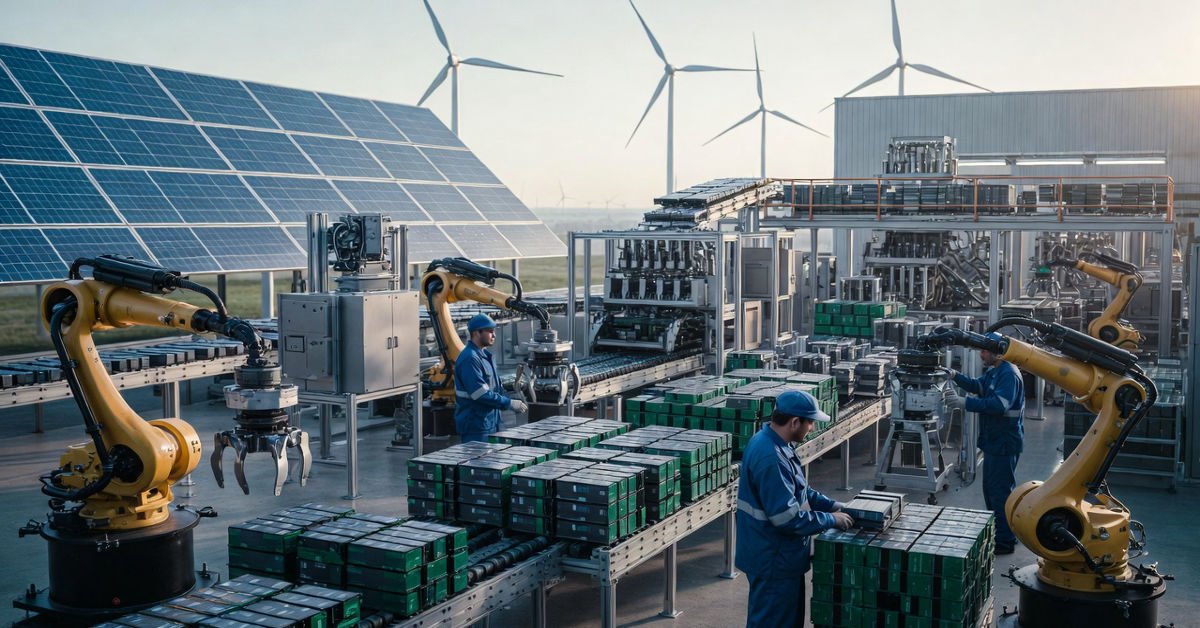
The rapid growth of electric vehicles (EVs) has transformed the global automotive industry and accelerated the transition toward cleaner transportation. While electric cars reduce tailpipe emissions and dependence on fossil fuels, they also introduce a new environmental challenge: what happens to their batteries when they reach the end of their useful life?
Electric car batteries contain valuable materials such as lithium, cobalt, nickel, and copper. If improperly disposed of, they can harm ecosystems and human health. This is where electric car battery recycling companies play a crucial role. These companies are building the backbone of a circular economy for energy storage by recovering critical materials and reducing the environmental footprint of EV production.
This article explores how battery recycling works, why it is essential, the leading companies in the sector, emerging technologies, and the future outlook for the industry.
Why Electric Car Battery Recycling Matters
Electric vehicle batteries typically last between 8 and 15 years. As millions of EVs reach the end of their life cycles in the coming decade, battery waste will increase dramatically.
Recycling is essential for several key reasons:
Environmental protection: Batteries contain toxic chemicals that can contaminate soil and water if dumped in landfills.
Resource conservation: Lithium, cobalt, and nickel are finite resources. Recycling reduces the need for environmentally damaging mining operations.
Energy efficiency: Producing materials from recycled batteries uses far less energy than extracting them from raw ores.
Supply chain security: Recycling helps stabilize the supply of critical minerals and reduces dependence on foreign mining sources.
Electric car battery recycling companies ensure that EV technology remains sustainable from production to disposal.
How Electric Car Battery Recycling Works
Battery recycling involves multiple steps designed to safely dismantle and extract valuable materials.
Collection and transportation: Used or damaged EV batteries are gathered from manufacturers, dealerships, and recycling centers.
Disassembly: Batteries are dismantled into modules and cells. Safety procedures prevent fires or chemical leaks.
Material separation: Advanced processes such as shredding, hydrometallurgy, or pyrometallurgy separate metals and compounds.
Refinement: Recovered materials are purified and prepared for reuse in new batteries or other industries.
Reuse and repurposing: Some batteries still retain capacity and can be repurposed for energy storage systems such as solar power backup units.
This process creates a closed-loop system where materials are continuously reused.
Major Electric Car Battery Recycling Companies
A growing number of companies worldwide specialize in EV battery recycling. They use innovative technologies to increase recovery rates and reduce environmental impact.
Leading Global Companies in EV Battery Recycling
| Company Name | Country | Key Technology | Core Focus |
|---|---|---|---|
| Redwood Materials | USA | Hydrometallurgical processing | Lithium, cobalt, nickel recovery |
| Li-Cycle | Canada | Spoke & Hub recycling model | Closed-loop battery materials |
| Umicore | Belgium | Pyrometallurgy and refining | Sustainable battery materials |
| CATL Recycling | China | Battery-to-battery recycling | EV supply chain integration |
| Glencore Recycling | Switzerland | Metallurgical processing | Industrial-scale metal recovery |
These companies collaborate with automakers and governments to build long-term recycling infrastructure.
Redwood Materials: Building a Circular Battery Economy
Founded by a former Tesla executive, Redwood Materials focuses on recovering critical minerals from used batteries and manufacturing scrap. The company’s mission is to create a circular supply chain where old batteries become the raw material for new ones.
Redwood’s technology allows it to recover over 95% of key battery components, including lithium and cobalt. It partners with major automakers and battery manufacturers to reduce costs and carbon emissions.
Li-Cycle: Innovating with the Spoke and Hub Model
Li-Cycle has developed a unique “Spoke & Hub” recycling system. Spokes collect and mechanically process batteries locally, while centralized Hubs refine the materials into battery-grade products.
This approach minimizes transportation risks and emissions. Li-Cycle is expanding across North America and Europe and aims to support large-scale EV adoption with sustainable recycling infrastructure.
European Leadership in Battery Recycling
Europe has taken a strong regulatory approach to battery recycling, supported by companies like Umicore and Northvolt.
Umicore uses advanced metallurgical processes to recover precious metals while maintaining strict environmental standards. Northvolt focuses on integrating recycled materials directly into battery manufacturing.
The European Union has introduced battery regulations requiring minimum recycled content in new batteries, driving growth for recycling companies.
Battery Recycling in China
China dominates global battery manufacturing and is also investing heavily in recycling. Major companies such as CATL and BYD operate recycling divisions to recover materials from old batteries.
China’s closed-loop system links EV production with recycling, helping stabilize raw material supply and reduce waste.
Challenges Facing Electric Car Battery Recycling Companies
Despite strong growth, the industry faces several challenges:
High initial costs: Recycling facilities require advanced technology and strict safety systems.
Battery design complexity: Different battery chemistries make recycling more complicated.
Transportation risks: Lithium-ion batteries can catch fire if improperly handled.
Regulatory differences: Recycling laws vary widely between countries, slowing global expansion.
Market volatility: Prices of lithium and cobalt fluctuate, affecting profitability.
Overcoming these challenges requires innovation, investment, and supportive government policies.
Emerging Technologies in Battery Recycling
New technologies are reshaping the industry:
Direct recycling: Instead of breaking batteries into raw metals, this method preserves cathode materials for reuse, saving energy.
AI-driven sorting: Artificial intelligence improves battery identification and material separation.
Low-emission refining: New chemical processes reduce greenhouse gas emissions.
Automation: Robotics improve safety and efficiency during battery disassembly.
These innovations will increase recovery rates and lower costs over time.
Second-Life Applications for EV Batteries
Not all batteries reaching end-of-life are completely unusable. Many still retain 70–80% of their capacity and can be repurposed.
Common second-life uses include:
Solar energy storage systems
Backup power for buildings
Grid stabilization projects
Telecommunication tower power units
Second-life applications delay recycling while maximizing resource efficiency.
Environmental and Economic Benefits
Electric car battery recycling companies contribute both environmental and economic value.
Key Benefits of EV Battery Recycling
| Benefit Category | Impact |
|---|---|
| Environmental | Reduces mining, landfill waste, and emissions |
| Economic | Creates jobs and new industries |
| Technological | Supports innovation in materials science |
| Energy security | Decreases dependence on imported minerals |
| Circular economy | Encourages sustainable production cycles |
Recycling strengthens the entire EV ecosystem.
Role of Governments and Regulations
Government policies are critical to the success of battery recycling. Many countries now require manufacturers to take responsibility for battery disposal.
Key regulatory trends include:
Extended Producer Responsibility (EPR)
Minimum recycled content requirements
Subsidies for recycling plants
Strict environmental standards
Such policies ensure that recycling grows alongside EV adoption.
Future Outlook for Electric Car Battery Recycling Companies
The future of battery recycling is promising. As EV sales rise, so will demand for sustainable waste management and material recovery.
Experts predict that the battery recycling market will grow into a multi-billion-dollar industry within the next decade. Companies that invest early in technology, partnerships, and infrastructure will lead the next phase of the clean energy revolution.
Electric car battery recycling companies will become as important as battery manufacturers themselves, forming the foundation of a responsible and resilient EV supply chain.
Conclusion
Electric vehicles are reshaping transportation, but their success depends on how responsibly their batteries are managed. Electric car battery recycling companies are essential for reducing environmental risks, conserving valuable resources, and creating a circular economy for clean energy.
Through innovation, partnerships, and regulation, these companies are transforming waste into opportunity. As the world moves toward electrification, battery recycling will no longer be optional—it will be a core pillar of sustainable mobility.
1 thought on “Electric Car Battery Recycling Companies”