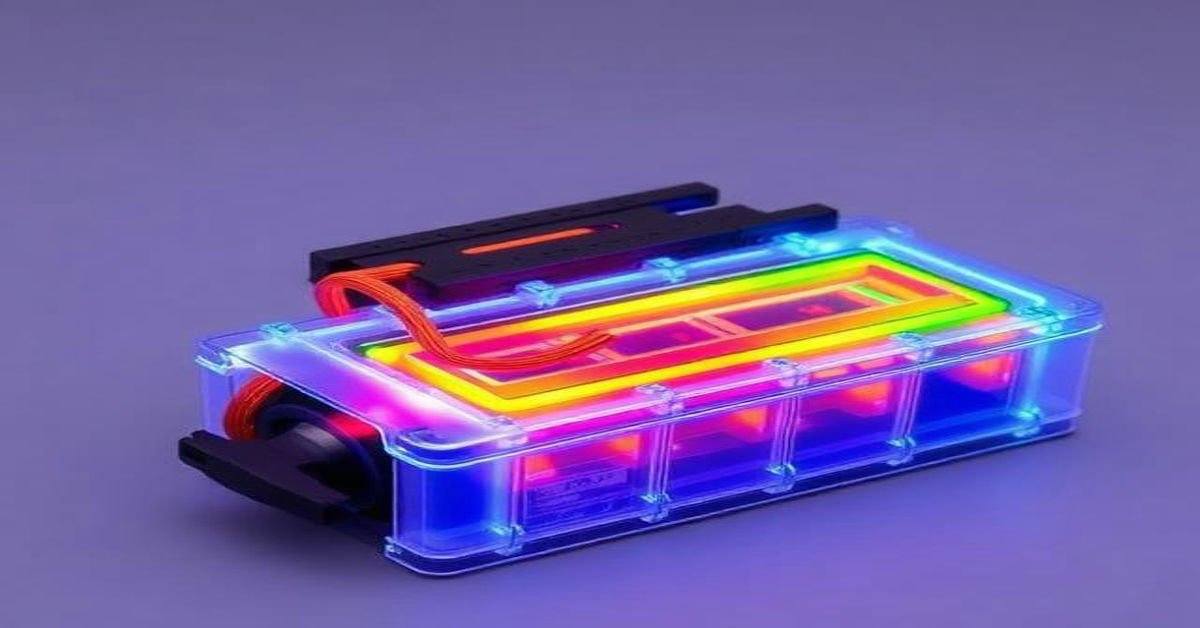
Electric vehicles (EVs) are transforming the global transportation ecosystem, offering cleaner mobility and lower operating costs. At the heart of every electric vehicle lies a battery pack that stores and delivers energy. While battery chemistry and capacity often receive the most attention, thermal management in EV battery packs is equally critical. Without effective temperature control, even the most advanced battery can suffer from reduced performance, safety risks, and shortened lifespan.
What Is Thermal Management in EV Battery Packs?
Thermal management in EV battery packs refers to the systems and strategies used to maintain battery cells within an optimal temperature range during charging, discharging, and storage. Lithium-ion batteries perform best within a narrow temperature window, typically between 20°C and 40°C.
When battery temperatures exceed or fall below this range, several issues arise:
-
Reduced energy efficiency
-
Slower charging speeds
-
Accelerated battery degradation
-
Increased safety risks such as thermal runaway
A well-designed thermal management system ensures consistent performance in all driving conditions—from cold winters to extreme summer heat.
Why Thermal Management Is Critical for EV Batteries
Battery temperature directly affects how safely and efficiently an EV operates. Poor thermal control can lead to irreversible damage, costly replacements, and even safety hazards.
Key Reasons Thermal Management Is Essential
| Factor | Impact on EV Battery |
|---|---|
| Safety | Prevents overheating and thermal runaway |
| Performance | Maintains stable power output |
| Battery Life | Reduces cell degradation over time |
| Charging Speed | Enables fast and safe charging |
| Reliability | Ensures consistent operation in all climates |
By managing heat effectively, manufacturers can deliver EVs that are safer, longer-lasting, and more reliable for daily use.
How Heat Is Generated Inside EV Battery Packs
Heat generation in EV batteries occurs naturally during operation. Understanding these heat sources helps explain why thermal management is so important.
Primary Sources of Heat
-
Internal resistance during charging and discharging
-
Fast charging, which pushes high current into the cells
-
High-speed driving or heavy acceleration
-
Environmental conditions, such as hot climates
Even small inefficiencies at the cell level can accumulate, causing significant temperature increases across the battery pack.
Types of Thermal Management Systems Used in EVs
Different EV manufacturers adopt different cooling and heating strategies depending on vehicle design, cost, and performance goals.
1. Air Cooling Systems
Air cooling uses ambient or forced air to remove heat from battery cells. It is commonly found in early or low-cost EVs.
Advantages
-
Simple design
-
Low manufacturing cost
-
Lightweight
Limitations
-
Less effective in extreme temperatures
-
Uneven cooling across battery cells
2. Liquid Cooling Systems
Liquid cooling circulates coolant through channels near battery cells, efficiently transferring heat away.
Advantages
-
High heat removal efficiency
-
Better temperature uniformity
-
Suitable for fast charging
Limitations
-
Higher cost
-
More complex design
| Cooling Type | Efficiency | Cost | Best Use Case |
|---|---|---|---|
| Air Cooling | Low–Medium | Low | Entry-level EVs |
| Liquid Cooling | High | Medium–High | Long-range & fast-charging EVs |
3. Phase Change Materials (PCM)
Phase change materials absorb heat by changing their physical state, such as from solid to liquid.
Benefits
-
Passive cooling (no pumps or fans)
-
Reduces temperature spikes
Challenges
-
Limited heat capacity
-
Often combined with other systems
4. Refrigerant-Based Cooling
Some advanced EVs integrate battery cooling with the vehicle’s air conditioning system using refrigerants.
Advantages
-
Excellent thermal control
-
Compact system design
Disadvantages
-
Increased system complexity
-
Higher maintenance requirements
Battery Heating: The Cold Climate Challenge
Thermal management is not only about cooling. In cold conditions, batteries struggle to deliver power efficiently.
Why Battery Heating Is Important
-
Prevents capacity loss in cold weather
-
Enables faster charging
-
Protects battery chemistry
Common Battery Heating Methods
| Method | Description |
|---|---|
| Electric Heaters | Resistive heating elements warm the pack |
| Heat Pumps | Reuse waste heat from other systems |
| Preconditioning | Heats battery before driving or charging |
Battery preconditioning is especially important for fast charging during winter months.
Thermal Runaway: The Biggest Safety Risk
One of the most serious battery hazards is thermal runaway, a chain reaction where rising temperatures cause uncontrollable heat release.
How Thermal Runaway Occurs
-
Cell overheats due to internal fault or damage
-
Chemical reactions generate more heat
-
Neighboring cells heat up
-
Fire or explosion risk increases
How Thermal Management Prevents It
-
Continuous temperature monitoring
-
Efficient heat dissipation
-
Physical separation of cells
-
Emergency shutdown mechanisms
Modern EVs are engineered to detect abnormal temperature behavior long before it becomes dangerous.
Role of Battery Management Systems (BMS)
Thermal management does not work alone. It is closely integrated with the Battery Management System (BMS).
Functions of BMS in Thermal Control
-
Monitors cell temperature in real time
-
Activates cooling or heating systems
-
Balances energy flow between cells
-
Triggers safety protocols
| BMS Function | Benefit |
|---|---|
| Temperature Monitoring | Early fault detection |
| Load Management | Prevents overheating |
| System Control | Optimizes battery health |
The coordination between BMS and thermal hardware is essential for safe EV operation.
Impact of Thermal Management on Battery Lifespan
Battery degradation accelerates when cells operate outside their ideal temperature range. Effective thermal management directly contributes to longer battery life.
Temperature vs Battery Degradation
| Temperature Range | Impact on Battery |
|---|---|
| Below 0°C | Reduced capacity, slower charging |
| 20–30°C | Optimal performance |
| Above 40°C | Accelerated aging |
| Above 60°C | High safety risk |
By keeping temperatures stable, EV manufacturers can offer longer warranties and better resale value.
Thermal Management and Fast Charging
Fast charging generates significant heat due to high current flow. Without proper cooling, fast charging would not be feasible.
How Thermal Systems Enable Fast Charging
-
Rapid heat removal from cells
-
Uniform temperature distribution
-
Active cooling during charging
This is why EVs with advanced liquid cooling systems often support higher charging speeds.
Design Challenges in EV Battery Thermal Management
Designing an efficient thermal management system is complex and involves multiple trade-offs.
Key Challenges
-
Balancing cost and performance
-
Minimizing weight and space
-
Ensuring uniform cooling
-
Adapting to different climates
Engineers must design systems that perform reliably across millions of driving scenarios.
Future Trends in EV Battery Thermal Management
As EV adoption grows, thermal management technology continues to evolve.
Emerging Innovations
-
AI-based temperature prediction
-
Advanced phase change materials
-
Integrated structural cooling
-
Solid-state battery thermal systems
These innovations aim to improve efficiency, safety, and sustainability while reducing system complexity.
Environmental Impact and Energy Efficiency
Efficient thermal management also improves overall energy efficiency by reducing unnecessary power consumption.
Benefits for Sustainability
-
Lower energy losses
-
Reduced cooling system load
-
Extended battery life (less waste)
This aligns thermal management with global sustainability goals and cleaner transportation.
Best Practices for EV Owners
While thermal systems are automatic, EV owners can still support battery health.
Tips for Better Thermal Performance
-
Avoid frequent extreme fast charging
-
Park in shaded or covered areas
-
Use scheduled charging and preconditioning
-
Keep software updated
These simple habits can significantly improve long-term battery reliability.
Conclusion
Thermal management in EV battery packs is a foundational element of electric vehicle design. It directly influences safety, performance, charging speed, and battery lifespan. As EV technology advances, thermal management systems are becoming smarter, more efficient, and more integrated with vehicle electronics.
By understanding how these systems work, consumers gain confidence in EV reliability, while manufacturers continue to push boundaries in battery innovation. Effective thermal management is not just a technical requirement—it is the backbone of safe, efficient, and sustainable electric mobility.
доктор хаус сезоны онлайн доктор хаус 3 сезон
Квартиры в новостройках https://novye-kvartiry78.ru Кировского района Санкт-Петербурга для комфортной жизни и выгодных инвестиций. Актуальные предложения от застройщиков, студии, одно-, двух- и трехкомнатные квартиры, современные жилые комплексы, удобный поиск по цене, площади и срокам сдачи.
It’s always a joy to stumble upon content that genuinely makes an impact and leaves you feeling inspired. Keep up the great work!
Ритуальные услуги https://buro-pohoron-vechnaya-pamyat.ru под ключ в Москве и Московской области. Поможем быстро и деликатно организовать похороны, подготовить необходимые документы, подобрать ритуальные принадлежности, транспорт и место захоронения. Круглосуточная консультация и сопровождение опытных специалистов.
Комплексное лечение https://medprime-clinic.ru и диагностика заболеваний с использованием современных медицинских методов. Полное обследование организма, точная постановка диагноза, индивидуальный план терапии, консультации специалистов и эффективное лечение с учетом особенностей здоровья пациента.
Пройдите комплексное лечение https://medprime-clinic.ru и диагностику в медицинском центре. Полный спектр обследований, консультации профильных специалистов, современные методы лечения, контроль состояния здоровья и индивидуальный подход на всех этапах медицинской помощи.
Только лучшие материалы: https://6may.org
микро займ онлайн взять займ