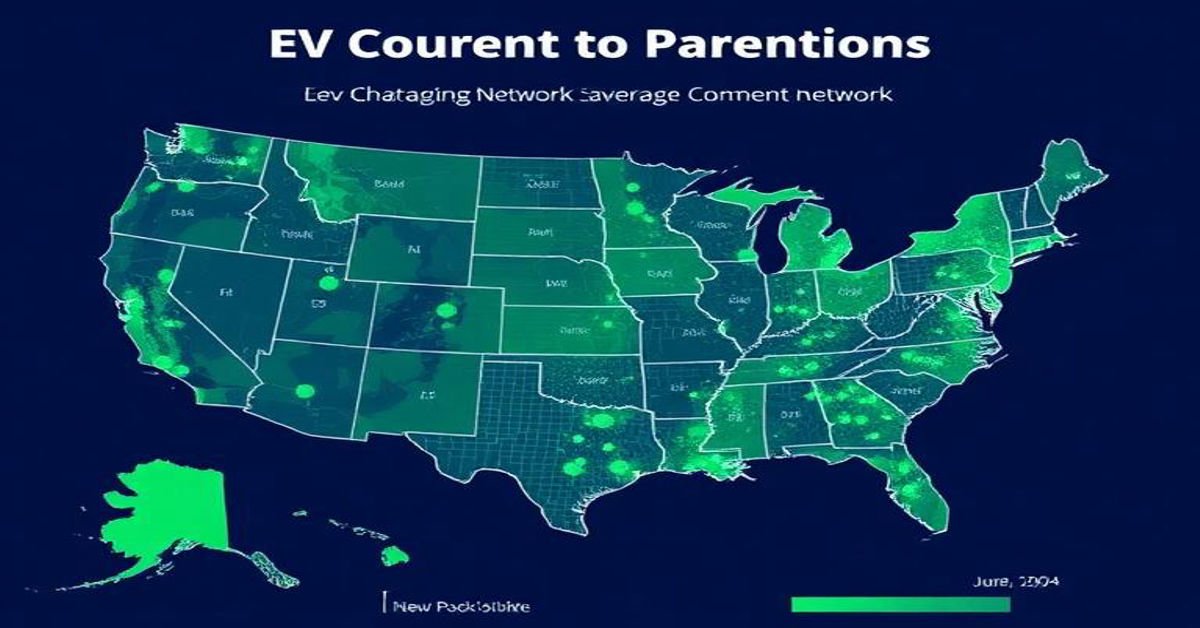
Introduction: Why EV Charging Network Coverage Matters in the USA
Electric vehicles are no longer a niche option in the United States. Millions of drivers now rely on EVs for daily commuting, long highway journeys, and family travel. While vehicle range and battery technology continue to improve, EV charging network coverage in the USA remains the backbone of electric mobility. Without a reliable and accessible charging infrastructure, even the best electric car cannot deliver a stress-free ownership experience.
Understanding EV Charging Levels in the USA
Before analyzing coverage, it is important to understand the different types of EV chargers available across the country. Each level serves a specific use case and impacts how drivers plan their charging routines.
Level 1 Charging
Level 1 charging uses a standard 120V household outlet. While widely accessible, it is extremely slow and adds only a few miles of range per hour. It is mostly suitable for overnight charging at home and does not contribute significantly to public charging coverage.
Level 2 Charging
Level 2 chargers operate on 240V power and are commonly found in homes, workplaces, shopping centers, hotels, and public parking areas. They offer a balance between speed and cost, making them a critical part of urban and suburban EV charging coverage in the USA.
DC Fast Charging
DC fast chargers, including ultra-fast stations, are designed for long-distance travel. They can add hundreds of miles of range in under an hour. These chargers are typically installed along highways and major travel corridors, making them essential for nationwide EV adoption.
Current EV Charging Network Coverage in the USA
The United States now hosts tens of thousands of public charging stations and well over a hundred thousand individual charging ports. Coverage varies widely by state, population density, and regional EV adoption rates.
Urban Coverage
Major metropolitan areas have the highest concentration of charging stations. Cities like Los Angeles, San Francisco, New York, Seattle, and Chicago feature dense networks of Level 2 and DC fast chargers. Urban coverage focuses on convenience, allowing drivers to charge while shopping, working, or dining.
Suburban Expansion
Suburbs are rapidly catching up, especially in states with high EV ownership. Shopping malls, office parks, apartment complexes, and public parking lots increasingly include EV chargers as a standard amenity.
Highway and Rural Coverage
Highway charging has improved significantly in recent years, with fast chargers installed along major interstates and travel routes. Rural areas still face gaps, but federal and state initiatives are actively addressing these limitations.
Major EV Charging Networks in the USA
Several charging networks play a key role in shaping EV charging network coverage in the USA. Each network differs in scale, charging speed, pricing, and user experience.
| Charging Network | Primary Focus | Coverage Strength |
|---|---|---|
| Tesla Supercharger | DC fast charging | Nationwide highways |
| Electrify America | Ultra-fast DC | Interstates and cities |
| ChargePoint | Level 2 + DC | Urban and suburban |
| EVgo | DC fast charging | Metro and highway |
| Blink | Level 2 | Urban locations |
These networks collectively ensure that EV drivers have multiple charging options across most regions of the country.
Role of Tesla Superchargers in National Coverage
Tesla has built one of the most extensive and reliable fast-charging networks in the world. Tesla Superchargers are strategically placed along highways, near hotels, and close to popular travel destinations. Their reliability and integration with Tesla vehicles make them a major contributor to EV charging network coverage in the USA.
In recent years, Tesla has opened parts of its Supercharger network to non-Tesla EVs, significantly improving accessibility and overall charging coverage for all electric vehicle owners.
Government Support and Federal Initiatives
The expansion of EV charging network coverage in the USA is strongly supported by government initiatives. Federal and state programs aim to eliminate charging deserts and ensure equitable access.
National Electric Vehicle Infrastructure Program
The NEVI program focuses on building fast-charging stations along designated highway corridors. This ensures that EV drivers can travel coast to coast without worrying about range anxiety.
State-Level Incentives
Many states offer grants, tax credits, and rebates to businesses and local governments that install EV chargers. These incentives accelerate the growth of charging infrastructure in underserved areas.
EV Charging Coverage by Region
West Coast
California leads the nation in EV charging coverage, followed by Washington and Oregon. Dense urban networks and strong policy support make the West Coast the most EV-friendly region.
Northeast
States like New York and Massachusetts have robust urban charging networks and growing highway coverage. Cold-weather performance considerations have also driven investments in reliable charging infrastructure.
Midwest
The Midwest is experiencing steady growth, with charging stations expanding along major highways and in metropolitan areas. Rural coverage remains a challenge but is improving.
South
Southern states are rapidly expanding EV charging networks, especially along interstates and in urban hubs. Tourism-driven charging infrastructure is also growing.
Public vs Private Charging Availability
| Charging Type | Location Examples | User Benefit |
|---|---|---|
| Public Charging | Malls, highways, cities | On-the-go charging |
| Workplace Charging | Offices, business parks | Daily convenience |
| Residential Charging | Homes, apartments | Overnight charging |
Public charging is essential for long trips and urban residents without home charging, while private charging supports daily routines.
Challenges Facing EV Charging Network Coverage
Despite rapid expansion, several challenges remain:
-
Uneven distribution between urban and rural areas
-
High installation and maintenance costs
-
Grid capacity limitations in some regions
-
Reliability and uptime concerns at certain stations
Addressing these challenges is critical for long-term EV adoption in the USA.
Technological Improvements Enhancing Coverage
Advances in charging technology are improving coverage efficiency. Smart chargers, real-time availability apps, and faster charging speeds reduce wait times and improve user experience. Standardization of connectors is also helping unify the charging ecosystem.
Impact of Charging Coverage on EV Adoption
Studies consistently show that improved EV charging network coverage directly increases EV adoption. When drivers feel confident that charging stations are readily available, they are more likely to choose an electric vehicle over a traditional gasoline car.
Future of EV Charging Network Coverage in the USA
The future looks promising. Planned investments will add tens of thousands of new charging stations over the next decade. Ultra-fast chargers, wireless charging pilots, and renewable energy integration will further strengthen coverage.
| Future Trend | Expected Impact |
|---|---|
| Ultra-fast chargers | Reduced charging time |
| Rural expansion | Nationwide accessibility |
| Smart grid integration | Lower energy costs |
| Renewable-powered stations | Cleaner charging |
Tips for EV Owners Navigating Charging Networks
-
Use charging apps to locate available stations
-
Plan long trips with fast-charging stops
-
Combine home and public charging strategies
-
Monitor charging costs and memberships
These practices help maximize the benefits of existing EV charging coverage.
Conclusion: Is EV Charging Network Coverage in the USA Sufficient?
EV charging network coverage in the USA has reached a level where electric vehicles are practical for most drivers. While gaps remain, especially in rural regions, ongoing investments, technological innovation, and policy support are rapidly closing these gaps. For current and future EV owners, the charging landscape is more reliable, accessible, and user-friendly than ever before.
Квартиры в новостройках https://novye-kvartiry78.ru Кировского района Санкт-Петербурга для комфортной жизни и выгодных инвестиций. Актуальные предложения от застройщиков, студии, одно-, двух- и трехкомнатные квартиры, современные жилые комплексы, удобный поиск по цене, площади и срокам сдачи.
Подробности на странице: https://6may.org