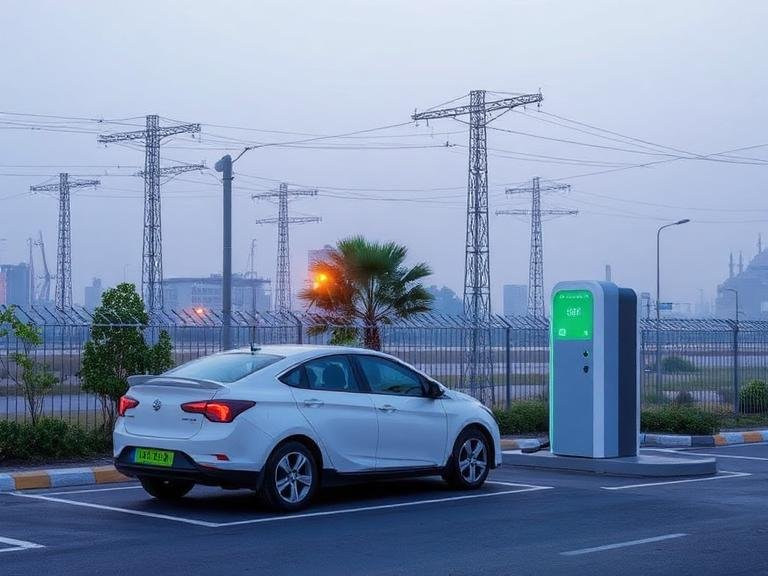
EV Battery Charging Network in India in the way people travel, commute, and transport goods. At the center of this change is the rapid adoption of electric vehicles (EVs). While electric cars, bikes, and buses are becoming more common on Indian roads, their success depends heavily on one critical factor: a reliable and widespread EV battery charging network.
An EV charging network is not just about installing charging stations. It includes power supply, technology standards, charging operators, digital platforms, payment systems, and government support. In India, building a strong EV battery charging ecosystem is essential to reduce fuel imports, cut emissions, and support sustainable mobility.
This article provides a detailed and practical overview of the EV battery charging network in India, covering its current status, types of charging, major players, government policies, challenges, and future growth prospects.
Understanding EV Battery Charging Networks in India
An EV battery charging network refers to a connected system of charging stations that allows electric vehicle users to recharge their batteries across cities, highways, residential areas, and commercial hubs. These networks are designed to provide easy access, safe charging, and efficient energy use.
In India, EV charging networks are still developing but are expanding rapidly due to rising EV sales and strong government push. Charging infrastructure is now seen as a national priority rather than a supporting service.
Why EV Charging Networks Matter in India
India has unique mobility challenges such as high population density, long commuting distances, and mixed vehicle usage. A well-planned EV charging network helps address these challenges by:
-
Reducing dependence on petrol and diesel
-
Lowering air pollution in cities
-
Supporting electric two-wheelers and three-wheelers
-
Enabling long-distance EV travel
-
Creating new business and employment opportunities
Without adequate charging infrastructure, EV adoption cannot scale effectively.
Types of EV Battery Charging in India
India follows global charging standards but adapts them to local conditions such as power availability, vehicle type, and cost sensitivity.
AC Charging
AC charging is the most common form of EV charging in India, especially for home and workplace use. It is slower but cost-effective and suitable for overnight charging.
AC chargers are widely used for electric cars, scooters, and two-wheelers.
DC Fast Charging
DC fast chargers provide quick charging and are commonly installed at public charging stations, highways, and commercial locations. These chargers significantly reduce charging time and are essential for long-distance travel.
DC charging is more expensive but crucial for building user confidence.
Battery Swapping
Battery swapping is an emerging model in India, particularly for electric two-wheelers and three-wheelers. Instead of charging the battery, users replace it with a fully charged one.
This model reduces waiting time and is gaining popularity among delivery fleets and ride-sharing services.
Common EV Charging Standards Used in India
| Charging Standard | Usage in India | Vehicle Type Supported |
|---|---|---|
| Bharat AC-001 | Widely used | Two-wheelers, Cars |
| Bharat DC-001 | Public charging | Cars, Commercial EVs |
| CCS2 | Rapid charging | Electric cars |
| CHAdeMO | Limited use | Imported EVs |
| Type 2 | AC charging | Cars |
These standards ensure interoperability and safety across different charging networks.
Current EV Charging Network Landscape in India
India’s EV charging infrastructure has expanded significantly over the last few years. Major cities such as Delhi, Bengaluru, Mumbai, Chennai, Hyderabad, and Pune have seen rapid deployment of public charging stations.
Highways connecting major cities are also being equipped with fast chargers to support intercity EV travel.
Public vs Private Charging Infrastructure
Public charging stations are installed by government bodies, public sector companies, and private operators. Private charging includes home chargers, apartment complexes, and office charging setups.
While private charging accounts for a large share of EV charging today, public charging networks are growing faster to meet increasing demand.
Major EV Charging Network Operators in India
Several companies are actively building EV battery charging networks across the country.
| Company Name | Coverage Area | Key Focus |
|---|---|---|
| Tata Power EV Charging | Pan-India | Public and fast charging |
| Ather Grid | Urban cities | Two-wheeler charging |
| ChargeZone | Highways and cities | DC fast charging |
| Statiq | Metro cities | Public charging |
| Jio-bp Pulse | Urban and highways | Integrated charging |
These companies partner with malls, fuel stations, offices, and local governments to expand access.
Role of Government in EV Charging Infrastructure
The Indian government plays a crucial role in accelerating EV charging network development through policies, incentives, and regulations.
FAME Scheme
The Faster Adoption and Manufacturing of Electric Vehicles (FAME) scheme provides financial support for EV adoption and charging infrastructure development.
National Electric Mobility Mission
This mission aims to promote EVs and reduce carbon emissions by supporting manufacturing and charging infrastructure.
State EV Policies
Many states like Delhi, Maharashtra, Tamil Nadu, Karnataka, and Gujarat offer additional incentives for charging station installation, including subsidies, electricity tariff benefits, and land access.
EV Charging Network for Two-Wheelers and Three-Wheelers
India’s EV market is dominated by two-wheelers and three-wheelers. Charging networks are increasingly designed to support these vehicles due to their high volume and daily usage.
Low-power chargers, swappable batteries, and neighborhood charging points are common solutions for these segments.
Battery Swapping Growth
Battery swapping stations are being deployed in urban areas for e-rickshaws and delivery vehicles, helping reduce downtime and increase productivity.
EV Charging Network on Indian Highways
Highway charging infrastructure is essential for long-distance EV travel. Government agencies and private players are installing fast chargers at regular intervals along national highways.
These chargers are usually placed at fuel stations, rest areas, and food courts to provide convenience during travel.
Digital Platforms and Charging Apps
Modern EV charging networks rely heavily on digital platforms. Charging apps help users:
-
Locate nearby charging stations
-
Check charger availability
-
Make digital payments
-
Monitor charging status
-
Plan routes
Popular charging apps in India integrate multiple networks to offer a seamless experience.
Challenges Facing EV Charging Networks in India
Despite strong growth, EV charging infrastructure in India faces several challenges.
Power Supply Limitations
Some regions face inconsistent electricity supply, which affects charger reliability.
High Installation Costs
Fast chargers require significant investment in equipment, grid upgrades, and land.
Urban Space Constraints
Limited parking and land availability in cities make charger installation difficult.
Standardization Issues
Multiple charging standards can confuse consumers and operators.
Opportunities for Growth in EV Charging Networks
India presents massive opportunities for EV charging infrastructure expansion.
-
Growing EV sales across segments
-
Increasing government support
-
Rising fuel costs
-
Corporate sustainability commitments
-
Smart city development
Private investment and public-private partnerships are expected to accelerate network growth.
Future of EV Battery Charging Networks in India
The future of EV charging in India looks promising and technology-driven. Key trends include:
-
Ultra-fast charging technology
-
Renewable energy-powered charging stations
-
Smart grid integration
-
Vehicle-to-grid systems
-
AI-based energy management
As EV adoption increases, charging networks will become smarter, faster, and more user-friendly.
Impact on Employment and Economy
The EV charging ecosystem creates jobs across installation, maintenance, software development, and operations. It also supports local manufacturing and entrepreneurship.
Charging infrastructure development contributes to India’s energy security and green economy goals.
Consumer Awareness and Education
For EV charging networks to succeed, consumer awareness is essential. Clear information on charger locations, charging time, safety, and costs helps build trust and confidence among EV users.
Education campaigns and transparent pricing play an important role in adoption.
Comparison of Charging Options in India
| Charging Type | Charging Time | Best Use Case |
|---|---|---|
| Home AC Charging | 6–8 hours | Daily commuting |
| Public AC Charging | 4–6 hours | Shopping, offices |
| DC Fast Charging | 30–90 minutes | Highways, quick top-up |
| Battery Swapping | 2–5 minutes | Delivery, commercial use |
Each option serves a different user need within the EV charging network.
Sustainability and Renewable Energy Integration
Many EV charging stations in India are beginning to integrate solar power and energy storage systems. This reduces grid load and improves sustainability.
Renewable-powered charging networks align with India’s climate commitments and reduce lifecycle emissions.
Conclusion
The EV battery charging network in India is the backbone of the country’s electric mobility revolution. While challenges exist, rapid expansion, government support, private investment, and technological innovation are driving steady progress.
From urban charging hubs to highway fast chargers and battery swapping stations, India is building a diverse and scalable charging ecosystem. As infrastructure continues to improve, EV adoption will accelerate, bringing long-term environmental, economic, and social benefits.
1 thought on “EV Battery Charging Network in India”