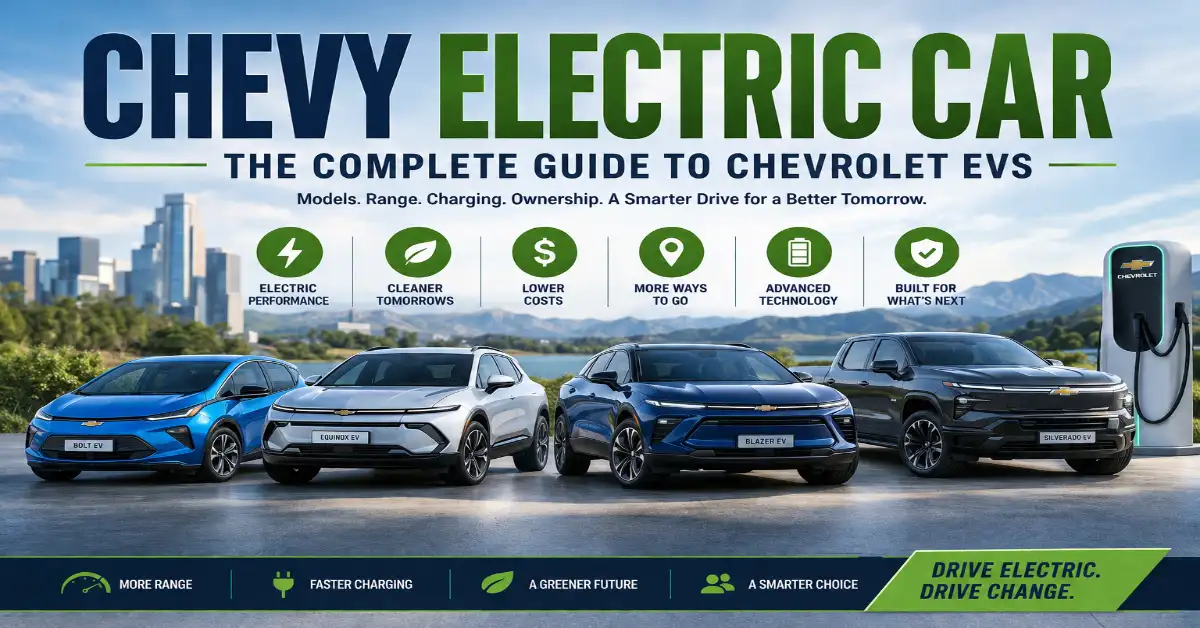
Chevy Electric Car lineup has grown rapidly over the last few years, making Chevrolet one of the leading electric vehicle brands in North America. Whether you’re looking for an affordable commuter, a family SUV, or an electric pickup truck, Chevrolet now offers several EV options designed for different lifestyles.
Modern Chevrolet EVs combine long driving ranges, advanced safety technology, fast charging capabilities, and lower operating costs than traditional gasoline-powered vehicles.
This guide covers everything you need to know before purchasing a Chevy electric car, including available models, battery technology, charging options, ownership costs, advantages, disadvantages, and expert buying advice.
What Is a Chevy Electric Car?
A Chevy electric car is a battery-powered vehicle manufactured by Chevrolet that operates entirely on electricity rather than gasoline.
Unlike conventional vehicles, electric cars use:
- High-capacity lithium-ion battery packs
- Electric motors
- Regenerative braking
- Smart energy management systems
- Advanced driver assistance technologies
Many newer Chevrolet EVs are built using GM’s Ultium battery platform, designed to improve efficiency, driving range, and charging speed.
Chevy Electric Car Models Available
Chevrolet currently offers several electric vehicles targeting different buyers.
| Model | Vehicle Type | Estimated Range | Best For |
|---|---|---|---|
| Chevy Bolt EV | Hatchback | Around 259 miles | City driving |
| Chevy Bolt EUV | Compact SUV | Around 247 miles | Families |
| Chevy Equinox EV | Compact SUV | Up to 300+ miles | Everyday driving |
| Chevy Blazer EV | Mid-size SUV | Up to 320 miles | Premium SUV buyers |
| Chevy Silverado EV | Electric Pickup | Up to 400+ miles | Work and towing |
Each model provides unique features depending on driving habits and budget.
Why Are Chevy Electric Cars Becoming So Popular?
Several factors explain the growing popularity of Chevrolet EVs.
Affordable Pricing
Chevrolet has positioned many EVs below competing premium electric vehicles.
Excellent Driving Range
Most modern Chevy electric cars easily cover daily commuting without frequent charging.
Low Maintenance
Electric vehicles eliminate many traditional maintenance items including:
- Oil changes
- Engine repairs
- Transmission servicing
- Spark plug replacement
Quiet Driving Experience
Electric motors produce very little noise, making driving smoother and more enjoyable.
Government Incentives
Many regions continue offering tax credits or rebates for qualifying electric vehicles.
Chevy Electric Car Range Comparison
Driving range is one of the most important factors when shopping for an EV.
City Driving
Electric vehicles perform exceptionally well in urban environments because regenerative braking helps recover energy.
Highway Driving
Higher speeds generally reduce battery efficiency compared to city driving.
Weather Effects
Cold temperatures can temporarily reduce battery range.
Driving Habits
Aggressive acceleration consumes more battery power than smooth driving.
Approximate ranges include:
- Bolt EV: 259 miles
- Bolt EUV: 247 miles
- Equinox EV: 300+ miles
- Blazer EV: Up to 320 miles
- Silverado EV: Up to 400+ miles
Charging a Chevy Electric Car
Charging options vary depending on your home setup and travel needs.
Level 1 Charging
Uses a standard household outlet.
Best for:
- Overnight charging
- Low daily mileage
Level 2 Charging
Requires a dedicated home charger.
Benefits include:
- Faster charging
- Convenient overnight charging
- Ideal for daily commuting
DC Fast Charging
Available at public charging stations.
Ideal for:
- Road trips
- Long-distance travel
- Emergency charging
Most modern Chevrolet EVs support fast charging capable of adding significant driving range in a relatively short time.
Chevy Electric Car Features
Chevrolet has equipped its EV lineup with numerous premium features.
Advanced Safety
Many models include:
- Automatic emergency braking
- Lane keeping assist
- Blind spot monitoring
- Adaptive cruise control
- Rear cross traffic alert
Infotainment
Drivers enjoy:
- Large touchscreen displays
- Wireless Apple CarPlay
- Android Auto
- Navigation
- Voice controls
Connected Technology
Many Chevrolet EVs support:
- Smartphone apps
- Remote charging control
- Battery monitoring
- Climate pre-conditioning
Pros and Cons of a Chevy Electric Car
Pros
- Lower fuel costs
- Minimal maintenance
- Quiet driving
- Instant acceleration
- Modern technology
- Environmental benefits
- Home charging convenience
- Competitive pricing
Cons
- Charging takes longer than refueling
- Public charging availability varies
- Battery range decreases in cold weather
- Higher purchase price than some gasoline vehicles
- Long-distance planning may require charging stops
Step-by-Step Guide to Buying a Chevy Electric Car
Determine Your Budget
Include:
- Purchase price
- Insurance
- Home charger
- Registration
Estimate Daily Driving
Most commuters travel well below the range of modern Chevrolet EVs.
Compare Models
Consider:
- Passenger capacity
- Cargo space
- Driving range
- Performance
- Charging speed
Explore Incentives
Check available federal, state, or local EV incentives.
Install Home Charging
A Level 2 charger significantly improves ownership convenience.
Test Drive
Evaluate:
- Ride comfort
- Visibility
- Interior quality
- Infotainment
- Driving dynamics
Common Mistakes to Avoid
Many first-time EV buyers make similar mistakes.
Avoid these:
- Buying more range than you actually need
- Ignoring charging availability
- Forgetting installation costs
- Skipping incentive research
- Not comparing insurance rates
- Choosing solely based on appearance
- Overlooking warranty coverage
Proper research can save thousands of dollars over the life of the vehicle.
Real-World Example
Sarah, a commuter traveling approximately 40 miles daily, replaced her gasoline sedan with a Chevy electric car.
Within one year she experienced:
- Reduced fuel expenses
- Lower maintenance costs
- Easier home charging
- Smoother daily commuting
- Less vehicle downtime
Although she invested in a Level 2 home charger initially, the long-term convenience and savings made the upgrade worthwhile.
Expert Tips Before Purchasing
Industry experts recommend:
- Charge between 20% and 80% for everyday driving.
- Use DC fast charging primarily during long trips.
- Schedule charging during lower electricity rates if available.
- Update vehicle software regularly.
- Maintain proper tire pressure to maximize efficiency.
- Learn regenerative braking techniques.
- Compare insurance quotes before purchasing.
Is a Chevy Electric Car Worth Buying?
For many drivers, yes.
A Chevrolet EV is especially worthwhile if you:
- Drive daily
- Have home charging access
- Want lower maintenance
- Prefer quiet driving
- Plan to own the vehicle for several years
Families, commuters, and environmentally conscious buyers often benefit the most from electric vehicle ownership.
Conclusion
The chevy electric car lineup has evolved into one of the strongest selections in today’s electric vehicle market. With affordable hatchbacks, spacious SUVs, and powerful electric trucks, Chevrolet offers options for nearly every lifestyle and budget.
Before purchasing, compare driving range, charging capabilities, pricing, available incentives, and long-term ownership costs. Taking time to evaluate your needs will help ensure you select the Chevrolet EV that delivers the best value and driving experience.
If you’re considering switching to electric, now is an excellent time to explore Chevrolet’s expanding EV lineup and schedule a test drive with your local dealer.
Frequently Asked Questions
1. Which is the cheapest Chevy electric car?
Historically, the Chevy Bolt EV has been one of Chevrolet’s most affordable electric vehicles, offering excellent value for budget-conscious buyers.
2. How far can a Chevy electric car travel?
Depending on the model, driving range typically varies from approximately 247 miles to over 400 miles on a full charge.
3. How long does charging take?
Charging time depends on the charging method. Level 1 charging is the slowest, Level 2 is much faster, and DC fast charging can add substantial range in under an hour for compatible models.
4. Is home charging necessary?
While not mandatory, home charging is highly recommended because it offers greater convenience and lower operating costs.
5. Are Chevy electric cars expensive to maintain?
No. Electric vehicles generally require less maintenance than gasoline-powered vehicles because they have fewer moving parts.
6. How long do Chevy EV batteries last?
Most EV batteries are designed to last many years, with warranties typically covering around eight years or 100,000 miles, depending on the model and market.
7. Can I take a Chevy electric car on road trips?
Yes. Modern Chevrolet EVs support fast charging and have sufficient range for long-distance travel with proper planning.
8. Does cold weather reduce range?
Yes. Cold temperatures can temporarily reduce battery efficiency and driving range.
9. Which Chevy EV is best for families?
The Equinox EV and Blazer EV offer spacious interiors, modern safety technology, and generous cargo capacity suitable for family use.
10. Should I buy a Chevy electric car in 2026?
If you want lower fuel costs, modern technology, reduced maintenance, and improved environmental performance, a Chevy electric car remains a strong option in 2026.
1 thought on “Chevy Electric Car Guide”