Portable EV Chargers for Travel in the USA are rapidly becoming a part of everyday life in the United States. With improved battery ranges, expanding charging networks, and growing environmental awareness, more Americans are choosing EVs for daily commuting and long-distance travel. However, one concern still remains for many EV owners when planning road trips or travel adventures: access to reliable charging.
This is where portable EV chargers for travel in the USA play a crucial role. These compact charging solutions provide flexibility, peace of mind, and convenience, especially when fixed charging stations are unavailable or crowded. In this comprehensive guide, we will explore portable EV chargers, how they work, their benefits, types, safety considerations, and the best use cases for travelers across the United States.
Understanding Portable EV Chargers
A portable EV charger is a compact charging device that allows electric vehicle owners to charge their cars using standard electrical outlets or compatible power sources while traveling. Unlike fixed home chargers or public charging stations, portable chargers can be carried in the vehicle and used wherever a suitable power connection is available.
In the U.S., portable EV chargers are especially useful due to long highway distances, rural travel routes, national parks, and varying availability of public charging stations across states.
Portable chargers typically connect to the vehicle through a standard charging connector such as J1772 or a Tesla-compatible adapter, making them versatile for many EV models.
Why Portable EV Chargers Are Essential for Travel in the USA
Traveling across the United States often involves unpredictable routes, weather conditions, and charging availability. Portable EV chargers offer several advantages that make them a valuable travel companion.
They provide backup charging in emergencies, allowing drivers to top up their battery when public chargers are unavailable. They also reduce range anxiety, especially in remote areas or during off-peak travel hours.
Additionally, portable EV chargers enable charging at hotels, campgrounds, vacation rentals, and even friends’ homes, offering flexibility that fixed chargers cannot match.
Types of Portable EV Chargers Available in the USA
Portable EV chargers come in different power levels and configurations. Understanding these types helps travelers choose the right charger for their needs.
Level 1 Portable EV Chargers
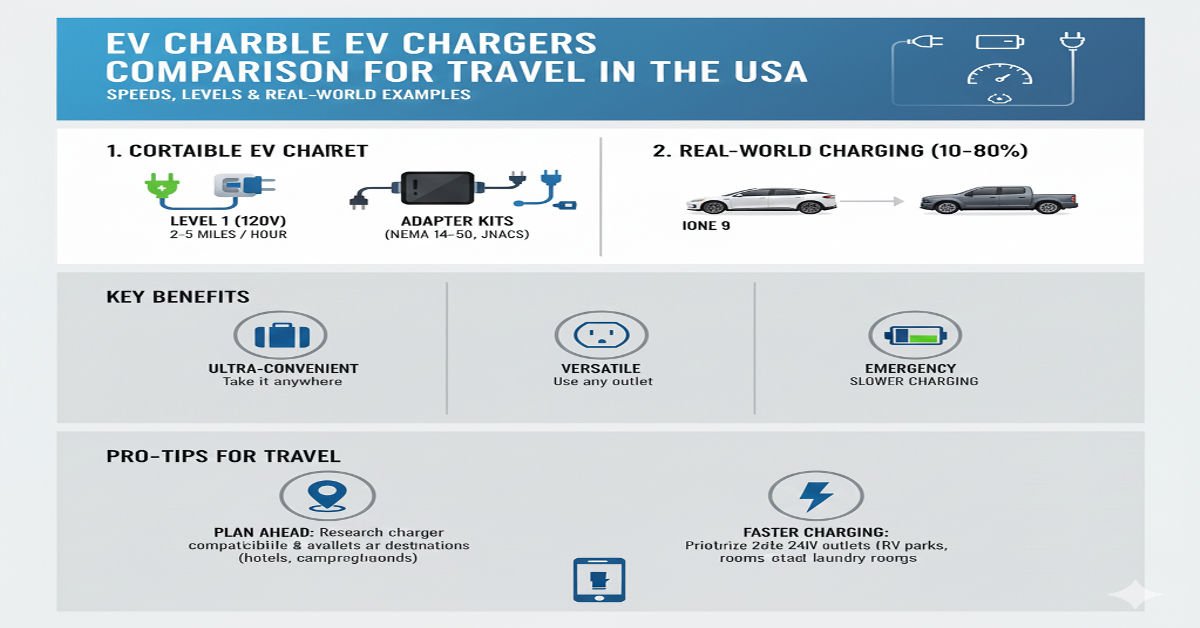
Level 1 chargers use standard 120V household outlets commonly found across the USA. They are usually included with the vehicle at purchase and are the most basic form of charging.
These chargers are slow but reliable and widely compatible, making them ideal for overnight charging during travel stops.
Level 2 Portable EV Chargers
Level 2 portable chargers operate on 240V outlets, similar to those used for RVs, dryers, or industrial equipment. They offer significantly faster charging speeds and are popular among frequent travelers.
Many Level 2 portable chargers come with interchangeable plugs, allowing compatibility with different outlet types commonly found in campgrounds and RV parks across the United States.
Smart Portable EV Chargers
Smart portable chargers include features such as adjustable charging speed, Wi-Fi or Bluetooth connectivity, mobile app monitoring, and safety diagnostics. These chargers are ideal for tech-savvy EV owners who want control and monitoring during travel.
Comparison of Portable EV Charger Types
The table below explains the key differences between common portable EV charger options used for travel in the USA.
| Charger Type | Power Source | Charging Speed | Best For Travel Use |
|---|---|---|---|
| Level 1 Portable Charger | 120V Standard Outlet | Slow | Overnight charging, emergency backup |
| Level 2 Portable Charger | 240V Outlet | Fast | Road trips, RV parks, hotels |
| Smart Portable Charger | 120V or 240V | Adjustable | Frequent travelers, monitoring needs |
Each type has its own advantages, and many EV owners choose to carry a Level 2 portable charger for faster and more reliable charging during long trips.
Key Features to Look for in a Portable EV Charger
Choosing the right portable EV charger requires careful consideration of several important features.
Compatibility with Your EV
Most EVs in the USA use the J1772 connector, except Tesla vehicles, which require an adapter. Ensure the charger is compatible with your car model and charging port.
Adjustable Amperage
Travel environments vary widely. A charger with adjustable amperage allows you to reduce power draw when using older wiring or increase speed when safe.
Plug Options
A good travel charger should support multiple plug types, such as NEMA 5-15, 14-50, or 6-20, which are common in U.S. homes, RV parks, and campgrounds.
Safety Certifications
Look for chargers certified by recognized safety standards. This ensures protection against overcurrent, overheating, and voltage fluctuations.
Weather Resistance
Travel often involves outdoor charging. A weather-resistant charger protects against rain, dust, and temperature changes.
Popular Travel Locations Where Portable EV Chargers Are Useful
Portable EV chargers are particularly valuable in specific travel scenarios across the United States.
Road Trips Through Rural Areas
Many rural highways and scenic routes have limited fast-charging infrastructure. A portable charger allows drivers to charge at motels, small inns, or private residences.
National Parks and Campgrounds
Many U.S. national parks and campgrounds offer RV hookups but limited EV charging stations. Portable chargers can connect to these power sources safely.
Hotels and Vacation Rentals
Not all hotels provide EV charging. Portable chargers allow travelers to charge overnight using accessible outlets with permission.
Emergency Situations
Unexpected detours, station outages, or long waits at public chargers can drain batteries. A portable charger acts as a reliable backup.
Charging Speed Expectations While Traveling
Charging speed depends on the charger type, outlet power, and vehicle battery capacity. Travelers should set realistic expectations to avoid inconvenience.
The table below provides approximate charging times for portable EV chargers commonly used in the USA.
| Charger Level | Power Output | Range Added per Hour | Typical Use Case |
|---|---|---|---|
| Level 1 | 1.4 kW | 3–5 miles | Overnight stays |
| Level 2 | 7–9.6 kW | 20–35 miles | Road trips, RV parks |
Understanding these limits helps travelers plan charging stops effectively and avoid unnecessary delays.
Safety Tips for Using Portable EV Chargers During Travel
Safety is critical when using portable EV chargers, especially in unfamiliar locations.
Always inspect the outlet before plugging in. Avoid damaged or loose sockets, as they can cause overheating. Use only heavy-duty extension cords if absolutely necessary and ensure they are rated for EV charging.
Never exceed the outlet’s rated capacity. Adjust the charging amperage if the wiring condition is uncertain. Keep charging equipment away from water puddles and ensure proper ventilation.
Additionally, inform property owners or hotel staff before using external outlets to avoid electrical issues or misunderstandings.
Cost Considerations for Portable EV Chargers
Portable EV chargers in the USA vary in price depending on features, power level, and brand reputation.
Basic Level 1 chargers are generally affordable and often included with EVs. Level 2 portable chargers cost more but offer faster charging and better flexibility for travelers.
While the upfront cost may seem high, portable chargers can save money in the long run by reducing reliance on expensive public fast chargers and minimizing travel disruptions.
Environmental and Practical Benefits
Using a portable EV charger aligns with sustainable travel goals. By enabling charging at renewable-powered locations such as solar-equipped homes or eco-friendly lodges, travelers reduce their carbon footprint.
Portable chargers also support decentralized energy use, easing pressure on public charging networks and contributing to a more resilient EV ecosystem in the USA.
How Portable EV Chargers Support the Growing EV Infrastructure
As EV adoption increases, charging infrastructure continues to expand. However, growth is uneven across regions. Portable EV chargers act as a bridge, ensuring drivers are not limited by infrastructure gaps.
They empower EV owners to explore less-developed regions, support tourism in remote areas, and encourage broader EV adoption by reducing charging concerns.
Real-World Experience of EV Travelers in the USA
Many experienced EV travelers report that carrying a portable charger significantly improves travel confidence. Whether charging overnight at a roadside motel or using an RV outlet at a campground, portable chargers provide flexibility that public stations alone cannot offer.
Travelers also appreciate the ability to charge during rest periods, meals, or scenic stops, making EV travel more relaxed and predictable.
Maintenance and Care of Portable EV Chargers
Proper care ensures long-term reliability. Store the charger in a dry, clean case when not in use. Avoid bending cables sharply and inspect connectors regularly.
After long trips, clean the charging pins and check for wear. Following manufacturer guidelines helps maintain safety and performance.
Future Trends in Portable EV Charging
The future of portable EV chargers in the USA looks promising. Advancements in compact design, higher power output, and smart energy management are making chargers more efficient and user-friendly.
Integration with renewable energy sources and improved compatibility across EV brands will further enhance the value of portable chargers for travelers.
Final Thoughts on Portable EV Chargers for Travel in the USA
Portable EV chargers are an essential tool for electric vehicle owners who travel across the United States. They provide flexibility, reliability, and peace of mind in a country known for its vast distances and diverse travel conditions.
By choosing the right portable charger and using it safely, EV travelers can enjoy seamless journeys without worrying about charging availability. Whether you are planning a cross-country road trip, visiting national parks, or simply preparing for emergencies, a portable EV charger is a smart investment for modern electric mobility.
3 thoughts on “Portable EV Chargers for Travel in the USA”