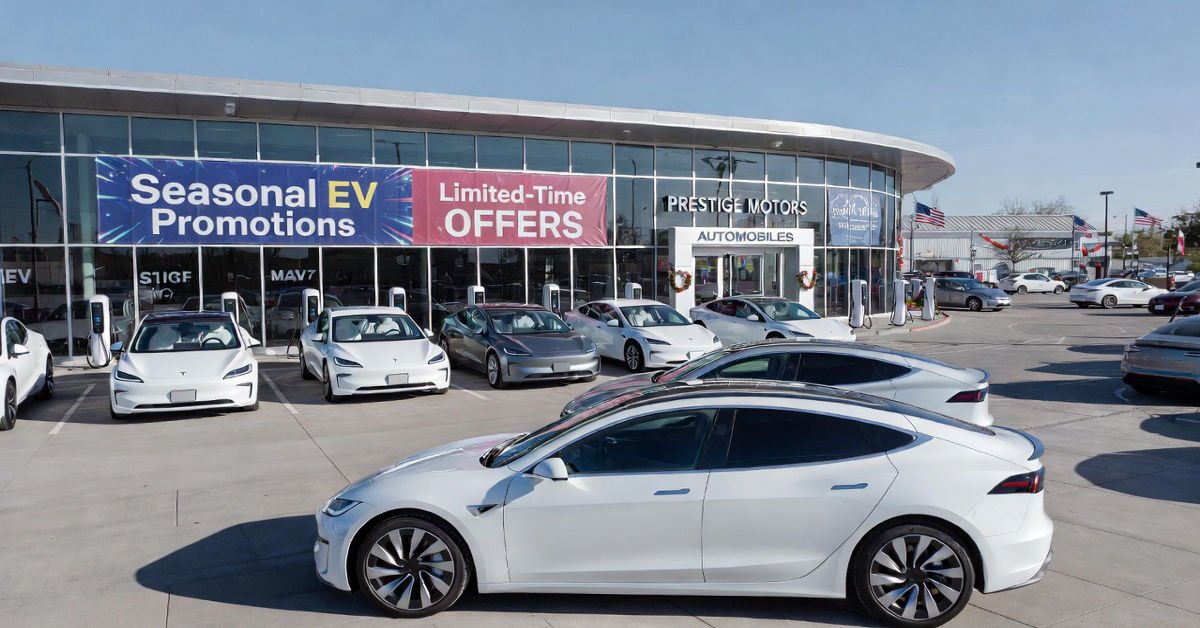
Electric vehicles (EVs) are no longer niche products in the United States. They are fast becoming a mainstream choice for families, commuters, and environmentally conscious buyers. One of the smartest ways to enter the EV market is by taking advantage of seasonal EV purchase promotions in the USA. These promotions can significantly reduce the upfront cost of an electric car through discounts, dealer incentives, manufacturer offers, and government-backed benefits.
Understanding Seasonal EV Purchase Promotions
Seasonal EV purchase promotions are limited-time offers that usually align with holidays, financial year endings, new model launches, or inventory clearance cycles. These promotions are driven by automakers, dealerships, and sometimes supported indirectly by policy incentives.
Unlike regular discounts, seasonal promotions often bundle multiple benefits together, such as reduced prices, low-interest financing, charging credits, or extended warranties. Buyers who understand these cycles can save thousands of dollars.
Why Seasonal Promotions Matter More for EVs
EV pricing is influenced by factors beyond normal vehicle sales. Battery costs, software updates, and eligibility for federal or state incentives can change throughout the year. Seasonal promotions often bridge the gap between sticker price and affordability.
Key reasons seasonal promotions matter:
-
EVs have higher upfront costs compared to gas cars
-
Inventory management is critical due to fast-evolving technology
-
Incentives can stack with tax credits and rebates
-
Dealers compete aggressively during peak sale seasons
Major Seasons for EV Purchase Promotions in the USA
End-of-Year Sales (November to December)
The strongest seasonal EV promotions usually happen at the end of the year. Dealers aim to clear inventory before new models arrive and meet annual sales targets.
Benefits during this season include:
-
Deep dealer discounts
-
Manufacturer cash-back offers
-
Low APR financing options
-
Lease incentives on outgoing models
Many buyers report the lowest EV prices of the year during late December, especially for models already in stock.
Spring Sales (March to April)
Spring promotions focus on new beginnings and tax refund season. Buyers often have extra cash from refunds, making this a popular time for auto purchases.
Spring EV promotions commonly include:
-
Competitive financing rates
-
Lease specials for urban drivers
-
Bonus trade-in values
Spring is ideal for buyers who want newer models without waiting for year-end clearance.
Summer Promotions (June to July)
Summer EV deals align with travel season and sustainability campaigns. Automakers often promote EVs as cost-effective road-trip vehicles.
Typical summer offers include:
-
Free or discounted home charger installation
-
Charging network credits
-
Special APR for short-term loans
These promotions are attractive for families planning long-distance travel.
Holiday Sales Events
National holidays are heavily used by dealerships to promote EV sales.
Popular EV promotion holidays:
-
Memorial Day
-
Independence Day
-
Labor Day
-
Black Friday
Holiday promotions often combine emotional marketing with genuine financial benefits, making them a smart time to buy if you are prepared.
Common Types of Seasonal EV Promotions
Cash Rebates
Cash rebates reduce the purchase price instantly. These rebates are often funded by manufacturers and applied at the dealership level.
Advantages:
-
Immediate savings
-
Simple to understand
-
Can stack with tax credits
Low or Zero APR Financing
Seasonal promotions often include reduced interest rates, sometimes as low as 0% APR for qualified buyers.
This is especially valuable for EVs due to higher base prices.
Lease Deals
EV lease promotions are common during seasonal sales, especially for city drivers.
Benefits of leasing:
-
Lower monthly payments
-
Easy upgrade to newer models
-
Reduced concern about battery depreciation
Charging Incentives
Some promotions include:
-
Free home charging equipment
-
Installation discounts
-
Public charging credits
These incentives lower the total cost of ownership and make EV adoption easier.
Federal and State Incentives and Their Seasonal Impact
While not strictly seasonal, government incentives often influence seasonal promotions.
The federal EV tax credit is managed by Internal Revenue Service, and its eligibility criteria can change year to year. Automakers often adjust seasonal promotions to compensate when certain models lose eligibility.
State-level programs vary widely. For example:
-
California often adds rebates during high-demand seasons
-
Some states increase funding at the start of a fiscal year
Dealers frequently highlight these incentives during peak promotion seasons.
Seasonal EV Promotion Comparison Table
| Season | Discount Level | Best For | Availability |
|---|---|---|---|
| End of Year | Very High | Budget-focused buyers | Limited stock |
| Spring | Moderate | New model buyers | High |
| Summer | Moderate | Families & commuters | Medium |
| Holidays | High | Impulse & planned buyers | Short-term |
Manufacturer vs Dealer Seasonal Promotions
Manufacturer promotions are nationwide and consistent, while dealer promotions are local and negotiable.
Manufacturer Offers
-
Cash-back
-
Special financing
-
Lease incentives
Dealer Offers
-
Price markdowns
-
Free accessories
-
Additional trade-in value
The best deals often come from combining both.
How Inventory Levels Affect Seasonal EV Deals
Dealers are more aggressive when:
-
Inventory is high
-
New models are arriving
-
Older models are not selling fast
EVs with shorter range or older charging standards often receive deeper seasonal discounts.
Real Buyer Experience: Timing Matters
Many EV buyers report saving between $3,000 and $8,000 by waiting for the right seasonal promotion. Those who rushed into purchases during high-demand periods often paid closer to MSRP.
Real-world experience shows:
-
December buyers get the best discounts
-
Holiday buyers get bonus add-ons
-
Spring buyers get better financing
Negotiation Tips During Seasonal Promotions
Even during advertised promotions, negotiation is possible.
Tips:
-
Ask for additional dealer incentives
-
Compare multiple dealerships
-
Negotiate trade-in value separately
-
Request charging perks
Seasonal promotions give buyers leverage.
Seasonal Promotions and Used EVs
Certified pre-owned EVs also benefit from seasonal pricing. End-of-year and holiday sales often include discounted used EVs with warranties.
Used EV buyers can benefit from:
-
Lower depreciation
-
Dealer certification programs
-
Seasonal markdowns
Risks to Avoid During Seasonal EV Sales
Not all promotions are equal.
Watch out for:
-
Inflated MSRP before discounts
-
Limited-time pressure tactics
-
Promotions tied to poor financing terms
Always review the total cost of ownership.
Long-Term Cost Benefits of Buying During Promotions
Seasonal promotions reduce not just purchase price but long-term costs.
Savings include:
-
Lower monthly payments
-
Reduced interest
-
Lower depreciation
-
Charging incentives
This makes EV ownership more affordable over time.
Seasonal EV Purchase Checklist
| Step | Action |
|---|---|
| Research | Track promotions early |
| Budget | Pre-approve financing |
| Compare | Check multiple dealers |
| Verify | Confirm incentive eligibility |
| Close | Buy during peak promotion |
The Future of Seasonal EV Promotions in the USA
As EV adoption grows, seasonal promotions are expected to continue, but with changes.
Trends to watch:
-
More software-based incentives
-
Subscription charging benefits
-
Shorter promotional windows
-
Increased competition among brands
Government policy and battery costs will continue to shape these offers.
Final Thoughts
Seasonal EV purchase promotions in the USA offer a powerful opportunity for buyers to save money while transitioning to cleaner transportation. By understanding promotional cycles, stacking incentives, and negotiating smartly, buyers can significantly reduce the cost of owning an electric vehicle.