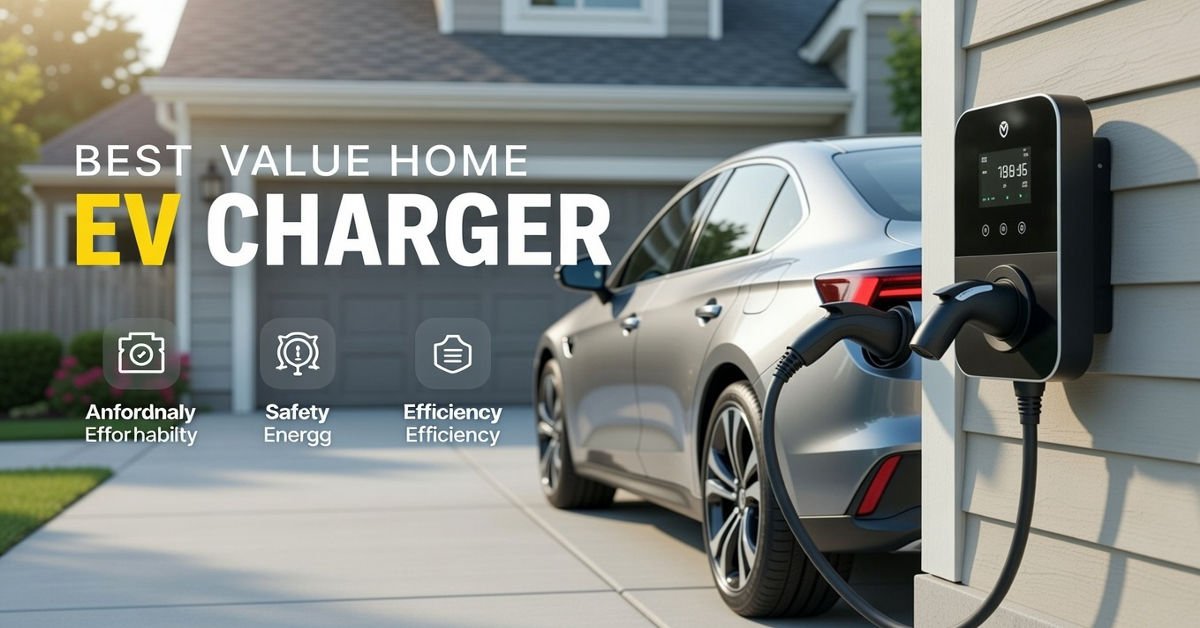
As electric vehicles (EVs) become more common around the world, home charging has quickly transformed from a luxury into a necessity. Public charging stations are helpful, but nothing matches the convenience, reliability, and long-term savings of charging your EV at home. For most drivers, the goal is not simply to buy the cheapest charger, but to find the best value home EV charger—a device that balances performance, safety, durability, and affordability.
This guide explores what “best value” truly means, how to evaluate different home EV chargers, and what features matter most. Whether you are a new EV owner or planning to upgrade your existing charger, this article will help you make an informed and confident decision.
What Does “Best Value Home EV Charger” Really Mean?
When shopping for a home EV charger, many people focus only on price. However, value is not the same as cost. A charger that is cheap but unreliable, slow, or unsafe may cost more in the long run through repairs, replacements, or higher electricity waste.
The best value home EV charger combines:
-
Reasonable upfront price
-
Reliable charging speed
-
Strong safety certifications
-
Long product lifespan
-
Useful smart features
-
Low maintenance
Value is about what you receive for the money you spend, not just how little you pay.
Why Home EV Charging Is the Most Practical Choice
Home charging gives EV owners freedom and peace of mind. You can charge overnight, avoid long queues at public stations, and better control electricity costs.
Key Benefits of Home Charging
-
Convenience of charging at your own schedule
-
Lower cost per unit of electricity compared to public chargers
-
Reduced stress during long commutes
-
Better battery care through controlled charging
-
Increased property value in many regions
For daily drivers, a home EV charger becomes part of everyday life, similar to having a home Wi-Fi router or a washing machine.
Types of Home EV Chargers Explained
Understanding charger levels is essential before choosing the best value option.
| Charger Type | Voltage | Average Charging Time | Best For |
|---|---|---|---|
| Level 1 | 120V | 12–24 hours | Emergency or light use |
| Level 2 | 240V | 4–8 hours | Most home users |
| DC Fast Charger | 400V+ | 30–60 minutes | Commercial use |
Paragraph Explanation
Level 1 chargers are slow and mainly suitable for short daily driving distances. Level 2 chargers offer the best balance of speed and cost for home users and are widely considered the best value choice. DC fast chargers are powerful but expensive and usually not practical for home installation.
Core Features That Define the Best Value Home EV Charger
When evaluating chargers, certain features directly affect performance, safety, and user experience.
1. Charging Speed and Power Output
Most value-focused chargers deliver between 7 kW and 11 kW of power. This range allows a full charge overnight without overwhelming home electrical systems.
A higher power output means:
-
Shorter charging times
-
Better support for future EV models
-
Greater daily convenience
2. Safety Certifications and Build Quality
A high-value charger must meet recognized safety standards such as:
-
Overcurrent protection
-
Ground fault detection
-
Temperature monitoring
-
Surge protection
Durable casing and weather resistance are especially important for outdoor installations.
Smart vs Non-Smart Chargers: Which Offers Better Value?
Smart chargers come with Wi-Fi or Bluetooth connectivity and mobile apps. Non-smart chargers are simple plug-and-charge devices.
| Feature | Smart Charger | Non-Smart Charger |
|---|---|---|
| Remote monitoring | Yes | No |
| Scheduling charging | Yes | No |
| Energy usage tracking | Yes | No |
| Price | Higher | Lower |
| Setup complexity | Medium | Low |
Paragraph Explanation
Smart chargers often provide better long-term value despite higher prices because they allow scheduling during off-peak electricity hours, monitoring power usage, and receiving firmware updates. However, for users who prefer simplicity, a well-built non-smart charger can still be excellent value.
Installation Costs and Electrical Requirements
The cost of installation can influence the total value of your home EV charger.
Typical factors affecting installation cost:
-
Distance from electrical panel
-
Panel capacity upgrades
-
Indoor vs outdoor mounting
-
Local electrical codes
A charger that is affordable but requires expensive wiring upgrades may not be the best value overall.
Energy Efficiency and Long-Term Savings
An efficient charger minimizes power loss and improves overall energy usage. Over years of daily charging, even small efficiency improvements can result in meaningful savings.
Efficient chargers also help:
-
Reduce heat buildup
-
Protect battery health
-
Lower environmental impact
-
Improve reliability
Value is not only measured in money but also in energy responsibility.
Durability and Weather Resistance
A best value home EV charger should last many years. Weatherproof ratings such as IP54 or higher protect the charger from rain, dust, and temperature changes.
Outdoor durability ensures:
-
Fewer replacements
-
Reduced maintenance
-
Stable performance in all seasons
Compatibility With Different Electric Vehicles
Universal compatibility is a key factor in value. Chargers that work with most EV brands ensure flexibility if you change vehicles in the future.
A high-value charger supports:
-
Standard charging connectors
-
Multiple vehicle brands
-
Adjustable power settings
This prevents the need to buy another charger later.
Comparing Value Across Price Categories
| Price Range | Typical Features | Value Level |
|---|---|---|
| Low | Basic charging, limited safety features | Moderate |
| Mid-range | Smart functions, strong safety, durable design | High |
| Premium | Advanced analytics, fast charging, luxury build | Variable |
Paragraph Explanation
Mid-range chargers usually provide the best value because they combine solid performance with useful smart features without the high cost of premium models.
Maintenance and Support
Customer support and warranty coverage are often overlooked but critical for value. A charger with strong warranty protection reduces risk and improves trustworthiness.
Look for:
-
2–3 year warranty minimum
-
Clear user manuals
-
Available customer service channels
-
Software updates for smart chargers
Environmental and Ethical Considerations
Choosing a charger built with efficiency and safety in mind also supports environmental goals. Sustainable manufacturing and lower electricity waste contribute to greener transportation.
The best value charger:
-
Encourages clean energy usage
-
Supports solar integration (where available)
-
Reduces overall carbon footprint
Common Mistakes When Buying a Home EV Charger
Many buyers focus on one factor and ignore others.
Mistakes to avoid:
-
Choosing the cheapest charger without safety certification
-
Ignoring installation costs
-
Buying incompatible models
-
Overpaying for unnecessary features
-
Skipping warranty evaluation
Smart buying means balancing all elements, not just price.
Who Should Invest in the Best Value Home EV Charger?
A value-focused charger is ideal for:
-
Daily commuters
-
Families with one or more EVs
-
Homeowners planning long-term use
-
Eco-conscious drivers
-
Budget-aware buyers
It provides reliability without overspending.
Future-Proofing Your Investment
Technology evolves quickly. A good value charger should support future upgrades through:
-
Adjustable power output
-
Software updates
-
Compatibility with new EV models
Future-proofing protects your investment and avoids replacement costs.
Final Thoughts: Choosing the Best Value Home EV Charger
The best value home EV charger is not necessarily the cheapest or the most advanced—it is the charger that meets your daily needs while providing safety, reliability, and long-term savings. By focusing on performance, durability, smart features, and total cost of ownership, you can make a decision that benefits both your budget and your lifestyle.
Home EV charging is more than a purchase; it is an investment in convenience, sustainability, and independence. A well-chosen charger becomes a trusted part of your routine, delivering consistent power every night and confidence every morning.
1 thought on “Best Value Home EV Charger”